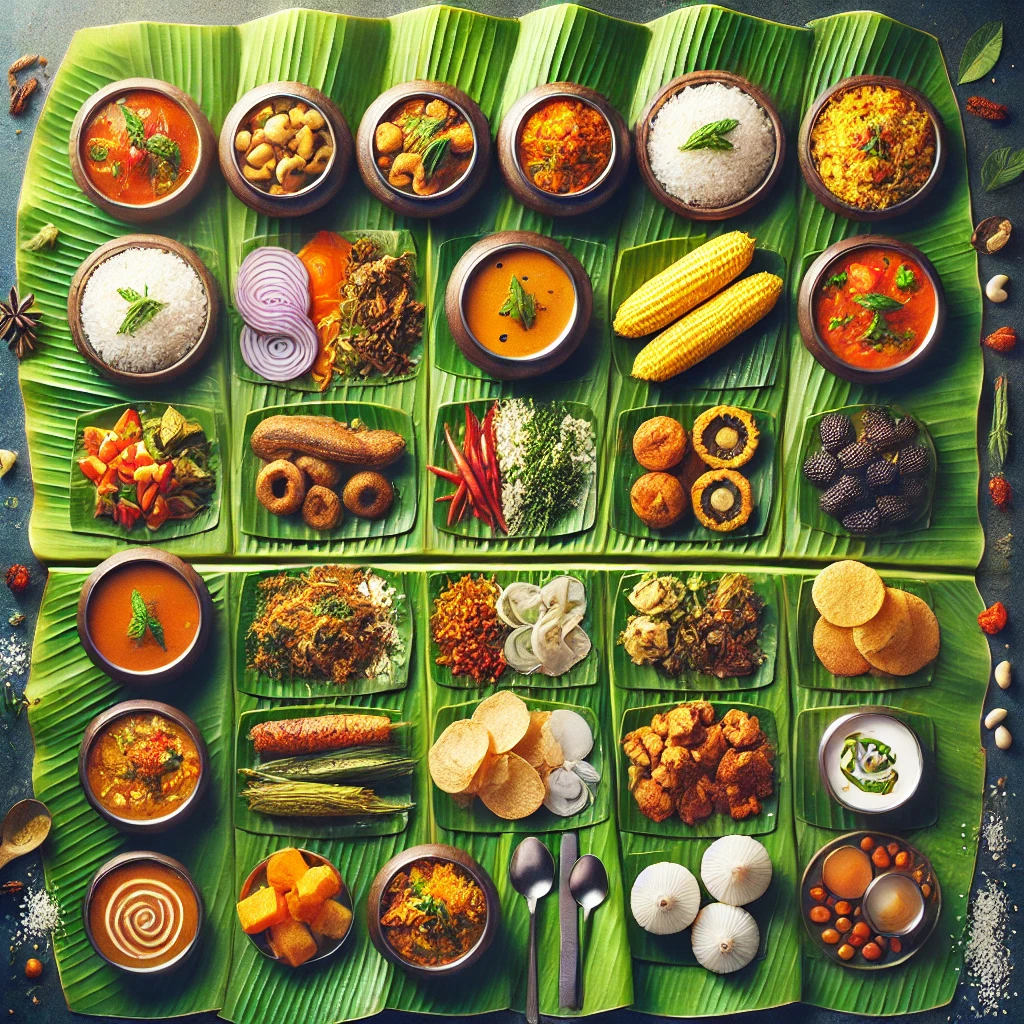
Soulful Events · Kerala Wedding Catering
Non-Veg Wedding Catering Menu in Kerala: The Complete Guide
Chicken, mutton, seafood & pork menus across North, Central & South Kerala — courses, pricing & community-style options explained.
Updated for 2026 · Kozhikode, Koyilandy & surrounding districts · 11 min read
What’s in This Guide
- Why Your Non-Veg Menu Choice Matters
- North vs Central vs South Kerala Wedding Cuisine
- Choosing Your Meat: Chicken, Mutton, Seafood & Pork
- Menu Styles by Community: Hindu, Muslim & Christian Weddings
- Course-by-Course Menu Breakdown
- Food Spread: Minimal vs Medium vs Wide
- Average Per-Plate Pricing Table
- Sample Budgets by Guest Count (with Bulk Discounts)
- 8 Tips to Get More Value From Your Caterer
- Frequently Asked Questions
1. Why Your Non-Veg Menu Choice Matters
For most Kerala weddings, the catering menu is remembered almost as much as the ceremony itself. Guests talk about the biryani, the fish curry, the payasam — long after the decor is forgotten. Getting the non-veg spread right means balancing three things: regional cuisine style, community tradition, and budget.
This guide breaks down everything you need to plan a non-veg wedding menu in Koyilandy, Kozhikode and across Kerala — what’s typically served, how pricing works, and how to avoid overpaying or under-ordering.
2. North vs Central vs South Kerala Wedding Cuisine
Kerala’s wedding food culture shifts noticeably as you move along the coast. Choosing a regional style isn’t just about taste — it shapes the entire menu structure.
North Kerala (Malabar Style)
Heavily influenced by Malabar Muslim cuisine — think fragrant biryanis, ghee rice, and rich meat curries. Mutton and chicken biryani are the showstoppers here, often paired with pickle, pappadam and raita.
Central Kerala
A blend of Syrian Christian and Nair traditions — appam with stew, beef-style pork roasts, and coconut-based curries like avial and olan sit alongside spiced meat preparations. This is where you’ll find the most diverse non-veg spread.
South Kerala
Coastal and rice-forward, with a strong seafood presence — fish curry, fish fry, prawns and crab dishes feature heavily, served with boiled rice and traditional accompaniments like pachadi and thoran.
3. Choosing Your Meat: Chicken, Mutton, Seafood & Pork
Most Kerala wedding caterers offer one or more of four meat categories. Here’s how they typically compare on cost and popularity:
Swipe to see full table →
| Meat Type | Typical Dishes | Per-Plate Range | Notes |
|---|---|---|---|
| Chicken | Chicken curry, biryani, 65, cutlet | ₹95 – ₹220 | Most economical, universally popular |
| Mutton | Mutton curry, biryani, pepper fry, chops roast | ₹190 – ₹280 | Premium choice, higher cost per plate |
| Seafood | Fish curry, fish fry, prawns masala, crab roast | ₹120 – ₹320 | Wide price range depending on fish/shellfish type |
| Pork | Pork roast, vindaloo, mappas, ularthiyathu | ₹175 – ₹235 | Most common at Central Kerala & Christian-style weddings |
Many couples mix two meat types — for example chicken for the main curry and seafood for a starter — to balance cost and variety. It’s entirely common to select multiple meat types for the same event.
4. Menu Styles by Community: Hindu, Muslim & Christian Weddings
Religious and community traditions strongly influence the structure of a Kerala wedding feast, even when the same meat types are used.
- Hindu weddings typically center on a rice-and-curry sadya-style spread, with sambar, avial, olan and payasam alongside non-veg curries served on the side.
- Muslim weddings (Malabar style) are famous for biryani-led menus — mutton or chicken biryani as the centerpiece, accompanied by pathiri, pickles and semiya payasam or dates-based desserts.
- Christian weddings often feature pork and beef-style preparations, appam, stew, and plum cake — a structure that traces back to Syrian Christian culinary tradition.
That said, none of these are hard rules — modern Kerala weddings increasingly mix styles freely based on what the couple enjoys.
5. Course-by-Course Menu Breakdown
Welcome Menu
The first thing guests are offered on arrival — usually light beverages rather than heavy food. Common choices: sulaimani chai, filter coffee, tender coconut water, fresh lime soda, and seasonal welcome drinks like rose milk or spiced buttermilk.
Starters & Salads
A mix of fried or roasted non-veg bites alongside fresh salads to balance the richness. Popular picks: chicken 65, mutton sukka, prawns roast, pork ularthiyathu, fish fry, and salads like Kerala mixed salad with pachadi or a simple cucumber-tomato salad.
Main Course
The heart of the meal — rice or biryani served with one or more curries. Expect chicken or mutton curry, fish curry, pork vindaloo, biryani options, plus traditional sides like avial, thoran, sambar, pappadam and pickle.
Desserts
Kerala weddings rarely skip payasam. Pal payasam, semiya payasam and ada pradhaman are staples, alongside community-specific options like plum cake (Christian), dates & nut halwa (Muslim), or unniyappam (Hindu), plus crowd-pleasers like fruit custard and ice cream.
6. Food Spread: Minimal vs Medium vs Wide
Caterers usually offer three spread tiers that control how many dishes appear per course. More items generally mean a higher overall cost per plate, even at the same meat selection.
Compact
Minimal Spread
Roughly 12–16 items across all four courses combined. Best for smaller, budget-conscious functions like housewarmings or intimate gatherings.
Popular
Medium Spread
Roughly 22–28 items across all courses. The most common choice for mid-size weddings — enough variety without excessive cost.
Premium
Wide Spread
32+ items across all courses. Ideal for large weddings and receptions where guests expect an elaborate, varied feast.
Exact counts vary slightly depending on which meat types and community style you select, since not every dish fits every combination.
7. Average Per-Plate Pricing Table
Here’s a general sense of moderate-to-high per-plate pricing by course, based on a typical mixed non-veg selection:
Swipe to see full table →
| Course | Items (Medium Spread) | Approx. Combined Rate / Plate |
|---|---|---|
| Welcome Menu | 3–4 beverages | ₹80 – ₹120 |
| Starters & Salads | 5–7 items | ₹450 – ₹650 |
| Main Course | 7–9 items | ₹650 – ₹950 |
| Desserts | 3–4 items | ₹100 – ₹160 |
These are indicative ranges — your exact total depends on which specific dishes, meat types and quantities you choose. Use our interactive menu & quote builder to get an instant per-plate and total estimate based on your exact selections.
8. Sample Budgets by Guest Count (with Bulk Discounts)
Catering costs don’t scale perfectly linearly — most caterers, including us, offer bulk discounts once your guest count crosses certain thresholds.
300 Plates
No discount tier
Typical for smaller weddings, engagements or receptions held within the family.
500 Plates
5% bulk discount
Crosses the 400-plate threshold — a common size for mid-size Kerala weddings.
800 Plates
10% bulk discount
Crosses the 700-plate threshold — typical for larger community weddings.
1200+ Plates
15% bulk discount
Crosses the 1000-plate threshold — large receptions and multi-day celebrations.
Discount tiers apply to your total plate count: 5% above 400 plates, 10% above 700 plates, and 15% above 1000 plates.
9. 8 Tips to Get More Value From Your Caterer
- Mix meat types strategically — pair a premium item (mutton or seafood) with more economical chicken dishes rather than going all-premium.
- Match spread to guest profile — a Minimal spread is often plenty for daytime functions where guests eat lightly.
- Confirm your final headcount early — locking in numbers a few weeks ahead helps you plan around bulk discount thresholds.
- Ask about seasonal seafood pricing — prawns and crab prices fluctuate seasonally more than chicken or mutton.
- Don’t skip the welcome menu — it’s inexpensive per plate but sets the tone for the whole event.
- Clarify what’s excluded — live counters, special equipment, and certain premium garnishes are sometimes priced separately.
- Request a tasting session — especially if you’re combining unfamiliar regional or community styles.
- Get your quote in writing — confirm item list, quantities and final rate before the event date.
Build Your Own Non-Veg Wedding Menu & Get an Instant Quote
Pick your region, meat type, community style and spread level — see exact dishes, pricing and your total cost in under a minute.
💬 Chat on WhatsApp📞 Call +91 83010 77114
10. Frequently Asked Questions
Can I mix meat types like chicken and seafood in one menu? Yes — most caterers, including us, support selecting multiple meat types for the same event so you can offer variety across courses. What’s the most economical meat type for a wedding menu? Chicken generally offers the lowest per-plate cost while still being universally popular with guests of all ages. Do bulk discounts apply automatically? Yes — discounts of 5%, 10% and 15% apply automatically once your total plate count crosses 400, 700 and 1000 plates respectively. Is pork available for Hindu or Muslim weddings? Pork is traditionally more common at Christian weddings, but it can be included in any menu if you’d like — the choice is entirely yours. How far in advance should I finalize my wedding menu? We recommend finalizing your menu and approximate guest count at least 3–4 weeks before the event to lock in pricing and availability.
Prices mentioned in this guide are indicative moderate-to-high per-plate ranges for budgeting purposes and may vary by season, venue and final menu selection. Contact Soulful Events on WhatsApp for an exact, confirmed quote.